Table of Contents
Using enough sunscreen helps provide proper UV protection. The commonly used facial guideline is two finger-lengths of sunscreen. This amount offers an easy daily measurement method. Apply it across your entire face evenly. Include the ears, hairline, temples, and jawline. The neck needs a separate sunscreen application.
The exact amount can vary slightly between people. Face size and product texture can affect coverage. However, underapplication remains a common sunscreen mistake. Using a consistent measurement method helps prevent this problem.
Master Advanced Skincare, Makeup, Hair, and Salon Management. Enrol Now!
How Much Sunscreen Should You Use on Your Face?
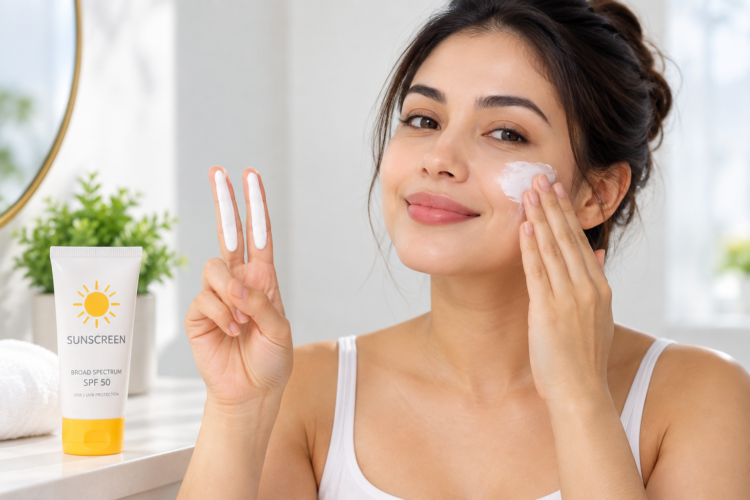
The two-finger method provides a simple measurement. Squeeze sunscreen along your index and middle fingers. Each strip should extend along the finger’s length. Together, these strips provide a practical facial amount.
Spread the sunscreen evenly across exposed areas. Do not focus only on your cheeks. Your forehead, nose, chin, and jawline need coverage. The ears and hairline also need attention. These areas are commonly missed during application.
A useful method involves dividing the sunscreen first. Place small amounts across different facial areas. Then spread everything evenly across your skin. This approach can reduce missed spots during application.
Which Facial Areas Need Sunscreen?
Every exposed facial area needs adequate sunscreen coverage. Some areas receive more sunlight than others. However, overlooked areas can still receive UV exposure.
Important areas include:
- Forehead.
- Both cheeks.
- Nose.
- Chin.
- Jawline.
- Temples.
- Upper lip area.
- Ears.
- Hairline.
- Around the eyes.
The nose often receives substantial sunlight exposure. The cheeks can also receive considerable UV exposure. The ears are frequently forgotten during application. The hairline can remain partially uncovered.
Does SPF Change the Required Amount?
SPF does not determine the required sunscreen amount. Higher SPF does not mean using less product. SPF ratings use standardized testing conditions. These tests involve a specific sunscreen thickness.
Using less sunscreen can reduce expected protection. SPF 50 still requires adequate application. Therefore, sunscreen quantity remains important at every SPF level.
What Happens When You Apply Too Little?
Insufficient sunscreen can reduce protective coverage. It can also leave some areas inadequately protected. Rubbing sunscreen too thinly creates similar problems.
Common underapplication habits include:
- Using a tiny amount.
- Applying sunscreen only to cheeks.
- Skipping the ears.
- Missing the hairline.
- Applying sunscreen only during sunny weather.
- Using makeup instead of sunscreen.
- Forgetting sunscreen during short outdoor trips.
A simple measurement method can prevent these mistakes. Consistent application also improves daily sun protection habits.
Why is the Right Amount of Sunscreen Important?
Sunscreen forms a protective layer over exposed skin. Adequate product helps create consistent coverage. Applying too little can make this layer thinner. Uneven application can also create protection gaps.
Ultraviolet radiation includes UVA and UVB rays. UVA exposure contributes to premature skin aging. UVB exposure commonly causes sunburn. Broad-spectrum sunscreen helps protect against both types.
Sunscreen protection depends on several factors. Quantity, coverage, and reapplication all matter. Daily application habits therefore remain important.
Why does Sunscreen Thickness Matter?
Sunscreen needs adequate coverage across exposed skin. The applied layer should remain reasonably even. Very thin application can reduce protection. Uneven spreading can also leave uncovered spots.
Think of sunscreen as a protective coating. That coating needs adequate product across your skin. Small amounts may not provide complete coverage.
Can SPF 50 Replace Proper Application?
No, SPF 50 cannot replace adequate application. Higher SPF does not compensate for underapplication. The recommended amount should remain consistent.
This applies to SPF 30 and SPF 50 products. SPF mainly describes tested UVB protection. Real-world protection depends on proper application. Regular reapplication also remains important.
Master Makeup, Hair & Skincare to Build Your Beauty Identity
Unlock your creative potential with our expert-led Beauty & Wellness course. Build in-demand beauty skills and step confidently into the world of beauty!
Your Beauty Career Starts Here!The Two-Finger Rule for Sunscreen
The two-finger rule simplifies sunscreen measurement. It uses your fingers as a visual guide. Apply sunscreen along two full finger lengths. Use your index and middle fingers for measurement.
This method requires no measuring equipment. It also makes daily application easier. Most people can remember the method easily. Consistent measurement can reduce accidental underapplication.
How Does the Two-Finger Rule Work?
Follow these simple steps:
- Choose your index and middle fingers.
- Squeeze sunscreen along your first finger.
- Create one continuous finger-length strip.
- Repeat this on your second finger.
- Use both strips for facial application.
- Distribute sunscreen across different facial areas.
- Spread the product evenly across your face.
- Check commonly missed areas afterward.
Avoid creating two tiny sunscreen dots. The goal involves substantial finger-length strips. Product texture can affect how strips appear. Follow product instructions when they provide measurements.
Why is the Two-Finger Rule Useful?
The method makes sunscreen measurement more practical. It removes the need for measuring tools. It also creates a consistent daily reference.
Morning routines often involve several skincare products. A simple measurement method saves time. It also reduces guesswork during application.
Does the Two-Finger Rule Work for Everyone?
The rule remains a useful general guideline. Facial sizes naturally differ between individuals. Sunscreen textures can also vary considerably.
Fluid formulas may spread more easily. Thicker creams may require careful distribution. These differences should not encourage underapplication.
Always consider the product’s application instructions. The main goal remains complete facial coverage.
How to Apply Sunscreen Correctly?
Correct application involves more than sunscreen quantity. Coverage and timing also affect practical protection. Sunscreen should cover exposed skin evenly.
Apply sunscreen after your other skincare products. Moisturizer usually comes before sunscreen. Allow previous products to settle before application. Then distribute sunscreen across your exposed facial areas.
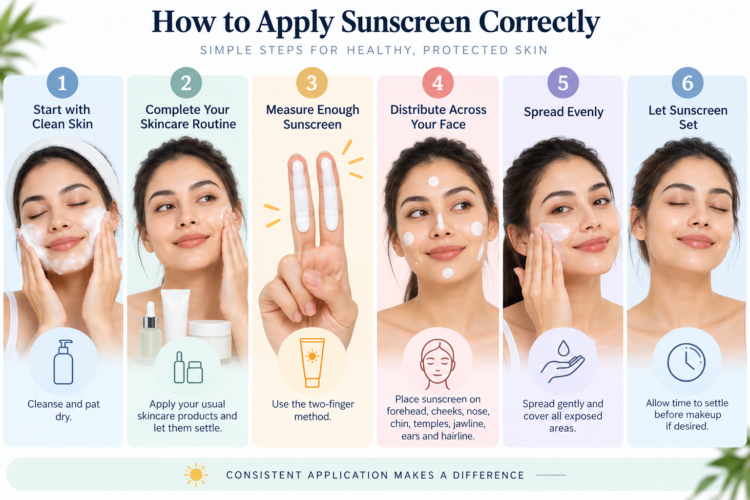
What is the Correct Application Process?
1. Start with clean skin
Begin with clean and dry skin. Use your regular gentle cleanser if needed. Pat your face dry after cleansing.
2. Complete your skincare routine
Apply your usual skincare products first. Moisturizer can support comfortable sunscreen application. Allow products to settle before sunscreen application.
3. Measure enough sunscreen
Use the two-finger method as guidance. Avoid estimating with a very small amount. Adequate quantity should remain the priority.
4. Distribute sunscreen across your face
Place sunscreen across multiple facial areas. Focus on the forehead, cheeks, nose, and chin. Remember your temples, jawline, ears, and hairline.
5. Spread sunscreen evenly
Gently spread the product across your skin. Make sure exposed areas receive adequate coverage. Avoid leaving obvious uncovered patches.
6. Let sunscreen settle
Give sunscreen some time to settle. Then continue with makeup if desired. Avoid mixing sunscreen directly with foundation.
Should Sunscreen Be Applied Before Makeup?
Yes, sunscreen should generally come before makeup. It acts as a dedicated protective skincare layer. Foundation should not replace sunscreen application.
Apply sunscreen evenly before foundation or concealer. Avoid mixing sunscreen directly with makeup. Mixing can change the applied sunscreen amount. It may also affect coverage uniformity.
How Often Should You Reapply Sunscreen?
Sunscreen needs regular reapplication during sun exposure. A common recommendation is every two hours. This applies during prolonged outdoor activities. Reapplication becomes especially important after swimming. Heavy sweating can also reduce sunscreen coverage.
Daily routines may require fewer applications indoors. However, sunlight can still reach indoor spaces. Windows can allow significant UVA exposure. Reapplication depends on your exposure and activities.
When Should You Reapply Sunscreen?
Consider reapplying sunscreen in these situations:
- After two hours outdoors.
- After swimming.
- After heavy sweating.
- After towel drying.
- During extended outdoor activities.
- After prolonged direct sun exposure.
- When sunscreen has visibly worn away.
Water-resistant sunscreen can offer better activity protection. However, water-resistant does not mean waterproof. Swimming and sweating can still reduce coverage.
Does Sunscreen Need Reapplication Indoors?
Reapplication depends on your daily environment. People spending most days indoors may need less. Outdoor exposure increases the need for reapplication.
Consider your proximity to windows. Direct sunlight can reach skin through windows. Driving can also increase one-sided sun exposure. Outdoor breaks may also increase cumulative exposure.
A simple routine can help maintain protection. Apply sunscreen every morning as a baseline. Reapply when exposure increases during the day.
How Should You Reapply Sunscreen Over Makeup?
Reapplication can become challenging with makeup. Several options can make the process easier. Cream or lotion sunscreen can work carefully. Sunscreen sticks can offer convenient touch-ups.
However, application must remain thorough. A quick swipe may provide insufficient coverage. Powder products may also provide limited coverage alone. Follow the product’s application instructions for best results.
Master Makeup, Hair & Skincare to Build Your Beauty Identity
Unlock your creative potential with our expert-led Beauty & Wellness course. Build in-demand beauty skills and step confidently into the world of beauty!
Your Beauty Career Starts Here!How Much Sunscreen Should You Apply to Your Neck?
The neck needs sunscreen whenever exposed to sunlight. It is often forgotten during morning routines. The front and sides need careful coverage. The back can also receive sun exposure.
The neck requires additional sunscreen beyond facial application. Do not simply stretch leftover facial sunscreen downward. There may not be enough product for complete coverage.
Apply sunscreen generously across exposed neck areas. Cover the front, sides, and back carefully. Extend application toward the collar area when exposed.
Why does the Neck Need Sunscreen?
The neck receives regular environmental sun exposure. It can therefore experience UV-related skin changes. Uneven sunscreen application can leave visible differences.
Common concerns include:
- Premature skin aging.
- Uneven skin tone.
- Increased sun sensitivity.
- Visible pigmentation.
- Sunburn.
Consistent sunscreen use supports better protection. It also keeps facial and neck routines consistent.
How Much Sunscreen does the Neck Need?
There is no universal finger rule for every neck. Neck size and clothing coverage can differ. More exposed skin requires more sunscreen.
Use enough product to cover the neck evenly. Do not spread a tiny amount extremely thinly. Add more product when the neck remains exposed.
A practical approach is applying sunscreen separately. First, measure your facial amount. Then apply additional sunscreen to your neck. This method helps avoid underapplication.
Which Parts of the Neck Should You Cover?
Apply sunscreen to every exposed neck area.
Pay particular attention to:
- Front of the neck.
- Sides of the neck.
- Back of the neck.
- Area below the jaw.
- Upper chest when exposed.
The back of the neck needs special attention. Hair may cover some areas temporarily. However, exposed sections still require sunscreen.
Should You Apply Sunscreen Under the Chin?
Yes, exposed skin under the chin needs coverage. This area can receive indirect sunlight. It is also commonly missed during application.
Apply sunscreen along the jawline carefully. Continue slightly underneath when the skin remains exposed. This creates more complete coverage around the face.
What are Common Sunscreen Application Mistakes?
Many sunscreen mistakes involve quantity and consistency. Some mistakes happen during rushed morning routines. Others happen during outdoor activities.

Avoid these common mistakes:
- Applying too little sunscreen.
- Missing the ears.
- Skipping the hairline.
- Forgetting the neck.
- Applying sunscreen only on sunny days.
- Applying sunscreen only before outdoor trips.
- Not reapplying after swimming.
- Not reapplying after heavy sweating.
- Rubbing sunscreen away with towels.
- Mixing sunscreen with foundation.
These mistakes can reduce consistent sunscreen coverage. Building simple habits can help prevent them.
Should You Apply Sunscreen Only During Summer?
No, sunscreen can remain useful throughout the year. UV exposure does not disappear during cooler months. Cloudy weather also does not eliminate UV exposure.
Daily sunscreen can therefore support consistent protection. Apply it whenever exposed skin may receive sunlight. Outdoor activities require additional attention and reapplication.
Can You Skip Sunscreen on Cloudy Days?
Clouds do not block all ultraviolet radiation. Some UV radiation can still reach exposed skin. Therefore, cloudy weather does not automatically remove sunscreen needs.
Your exposure level should guide reapplication. Outdoor activities still require regular sunscreen use. Apply sunscreen before spending significant time outside.
How Can You Make Sunscreen Application Easier?
A simple routine makes sunscreen easier to maintain. Keep sunscreen somewhere visible each morning. Apply it after completing your skincare routine.
These habits can improve consistency:
- Keep sunscreen near skincare products.
- Use the same application method daily.
- Follow the two-finger measurement.
- Cover the face systematically.
- Include the ears and hairline.
- Apply additional sunscreen to the neck.
- Reapply during prolonged outdoor exposure.
- Carry sunscreen during outdoor activities.
Choosing a comfortable sunscreen can also help. Heavy textures may discourage frequent application. Lightweight formulas may feel easier for some users.
Skin type can influence product preference. Oily skin may prefer lighter textures. Dry skin may prefer moisturizing sunscreen formulas. Sensitive skin may need carefully selected products.
The best sunscreen is one used consistently. Comfort can therefore influence long-term adherence.
Master Advanced Skincare, Makeup, Hair, and Salon Management. Enrol Now!
What Should You Remember About Sunscreen Quantity?
The most important point is simple. Use enough sunscreen for complete coverage. The two-finger method offers practical facial guidance. The neck needs additional sunscreen when exposed.
Quantity alone is not the only consideration. Application technique also affects coverage quality. Reapplication becomes important during prolonged exposure.
Remember these core practices:
- Measure your facial sunscreen consistently.
- Cover every exposed facial area.
- Apply sunscreen before makeup.
- Give sunscreen time to settle.
- Reapply during extended outdoor exposure.
- Reapply after swimming or heavy sweating.
- Cover your neck separately.
- Do not rely only on SPF.
- Avoid intentionally stretching tiny amounts.
- Follow your sunscreen’s product instructions.
Conclusion
Using enough sunscreen supports better UV protection. The two-finger method offers simple facial measurement. It helps reduce accidental underapplication during daily routines.
Apply sunscreen across the entire exposed face. Remember the ears, hairline, temples, and jawline. Apply additional sunscreen across the exposed neck. Reapply during prolonged outdoor exposure and activities.
Sunscreen works best with consistent daily use. Quantity, coverage, and reapplication all matter. A simple routine can make these habits easier.
Master Makeup, Hair & Skincare to Build Your Beauty Identity
Unlock your creative potential with our expert-led Beauty & Wellness course. Build in-demand beauty skills and step confidently into the world of beauty!
Your Beauty Career Starts Here!Frequently Asked Questions
How much sunscreen should I use?
Use about two finger-lengths for your face. This provides a practical daily measurement.
Is the two-finger sunscreen rule accurate?
It offers a simple general measurement method. Product instructions should also be considered.
Can I use less sunscreen with SPF 50?
No, higher SPF does not reduce the amount. Adequate application remains essential.
Should sunscreen cover the ears?
Yes, exposed ears should receive sunscreen. They are commonly missed during facial application.
Should sunscreen be applied before makeup?
Yes, apply sunscreen before makeup products. Foundation should not replace sunscreen.
How often should sunscreen be reapplied?
Reapply about every two hours during prolonged exposure. Reapply sooner after swimming or sweating.
Does sunscreen need reapplication indoors?
It depends on your sunlight exposure. Extended window exposure may require reapplication.
How much sunscreen should cover the neck?
Apply enough to cover exposed neck areas evenly. Use additional sunscreen beyond your facial amount.
Should sunscreen be used on cloudy days?
Yes, UV radiation can still reach exposed skin. Cloudy weather does not eliminate UV exposure.
Can sunscreen be mixed with foundation
Mixing can affect sunscreen application and coverage. Apply sunscreen separately before makeup.