Table of Contents
Introduction
Skin can be protected with sunscreen. Sun damage can also be reduced. Different skin need different formulas. A suitable product should feel comfortable. One must maintain daily protection. This blog is about, how to one can choose right sunscreen for their skin type.
Master Advanced Skincare, Makeup, Hair, and Salon Management. Enrol Now!
Why Is Sunscreen Important?
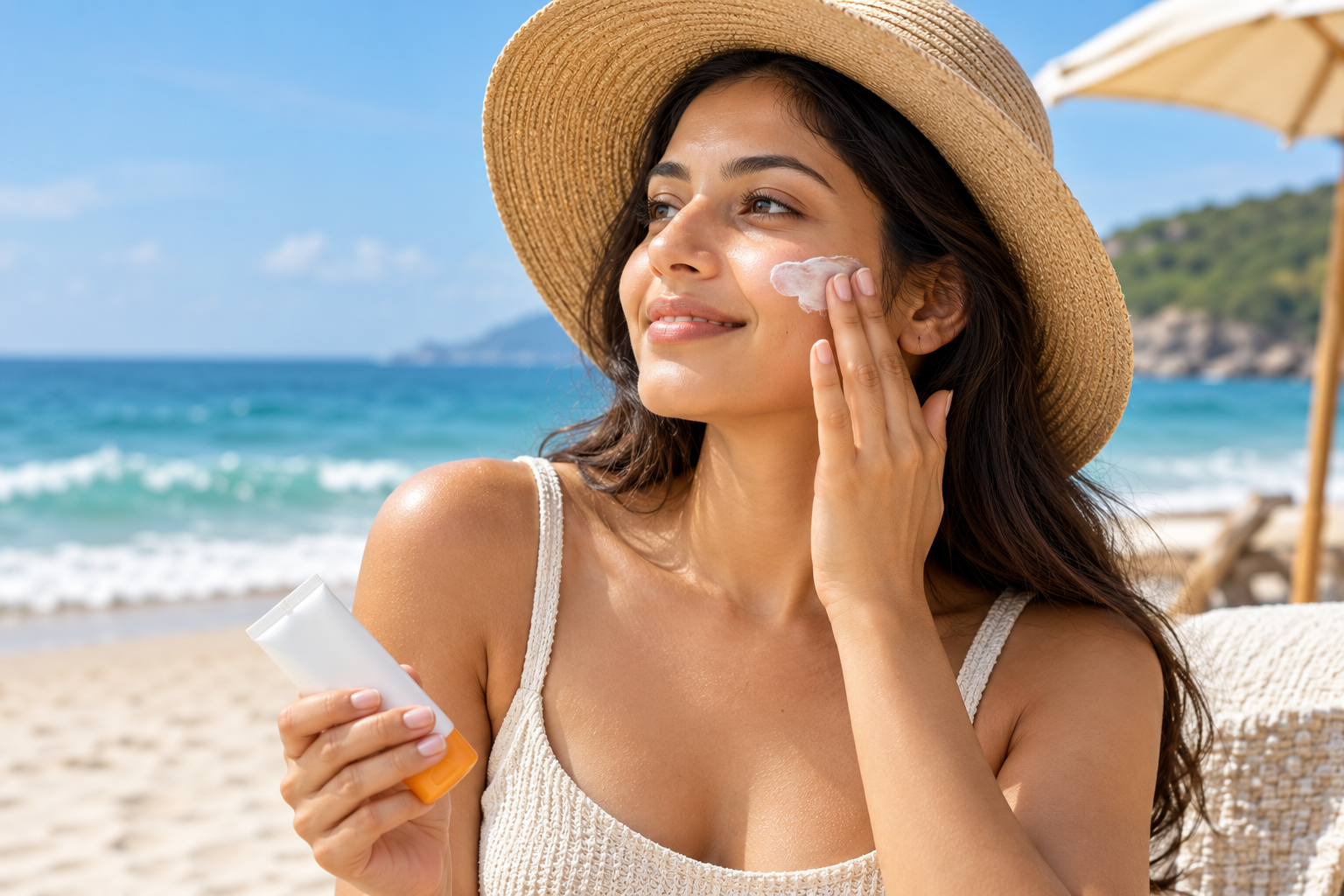
Sunlight has harmful rays. They are called UV rays. Skin get damaged by them. Hence, one needs sun protection. This production must be maintained all day.
1. Protection Against UV Rays
UVA rays can affect deeper skin layers. Early ageing can also be caused. One can see the dark spots. UVB rays lead to sunburn. It may follow skin redness. And sometimes peeling. Broad-spectrum sunscreen protects from both.
– UVA Rays
- Early ageing.
- Dark spots.
- Deeper damage.
– UVB Rays
- Sunburn.
- Redness.
- Peeling.
– Broad Spectrum
- UVA protection.
- UVB protection.
- Daily defence.
2. Sunburn Prevention
Sunburn cause skin discomfort. Redness may also be noticed. Pain develop after exposure. Severe burns cause peeling. One can reduce these. Apply sunscreen generously. SPF 30 / higher is preferred. Cover exposed skin.
– Warning Signs
- Redness.
- Pain.
- Peeling.
– Extra Protection
- Hats.
- Umbrellas.
- Protective clothing.
- Shade breaks.
3. Reduced Early Ageing
Skin changes develop over time. Fine lines become visible. Dark spots also appear. Uneven texture can develop. UV damage reduces with sunscreen. Daily application should be maintained. The face and neck need coverage. The ears should also be covered.
– Common Changes
- Fine lines.
- Dark spots.
- Uneven texture.
– Helpful Habits
- Daily sunscreen.
- Sunglasses.
- Protective clothing.
- Regular reapplication.
4. Skin Cancer Prevention
UV rays lead to skin cells. High exposure results in cancer. Risk can be reduced with sunscreen. Full protection not guaranteed. SPF 30 / higher is recommended. Product instructions should be followed. Avoid tanning beds. Check unusual skin changes.
– Daily Protection
- Broad spectrum.
- Generous application.
- Regular reapplication.
– Extra Care
- Protective clothing.
- Skin checks.
- Medical advice.
5. Better Daily Skincare
Sunscreen is mostly applied in the morning. It should be applied after moisturizer. Makeup can then be applied. Each skin need different formulas. Good products are used daily.
– Morning Routine
- Gentle cleaning.
- Moisturiser.
- Sunscreen.
– Product Choice
- Skin type.
- Suitable ingredients.
- Comfortable texture.
Master Makeup, Hair & Skincare to Build Your Beauty Identity
Unlock your creative potential with our expert-led Beauty & Wellness course. Build in-demand beauty skills and step confidently into the world of beauty!
Your Beauty Career Starts Here!Choosing Sunscreen for Your Skin Type
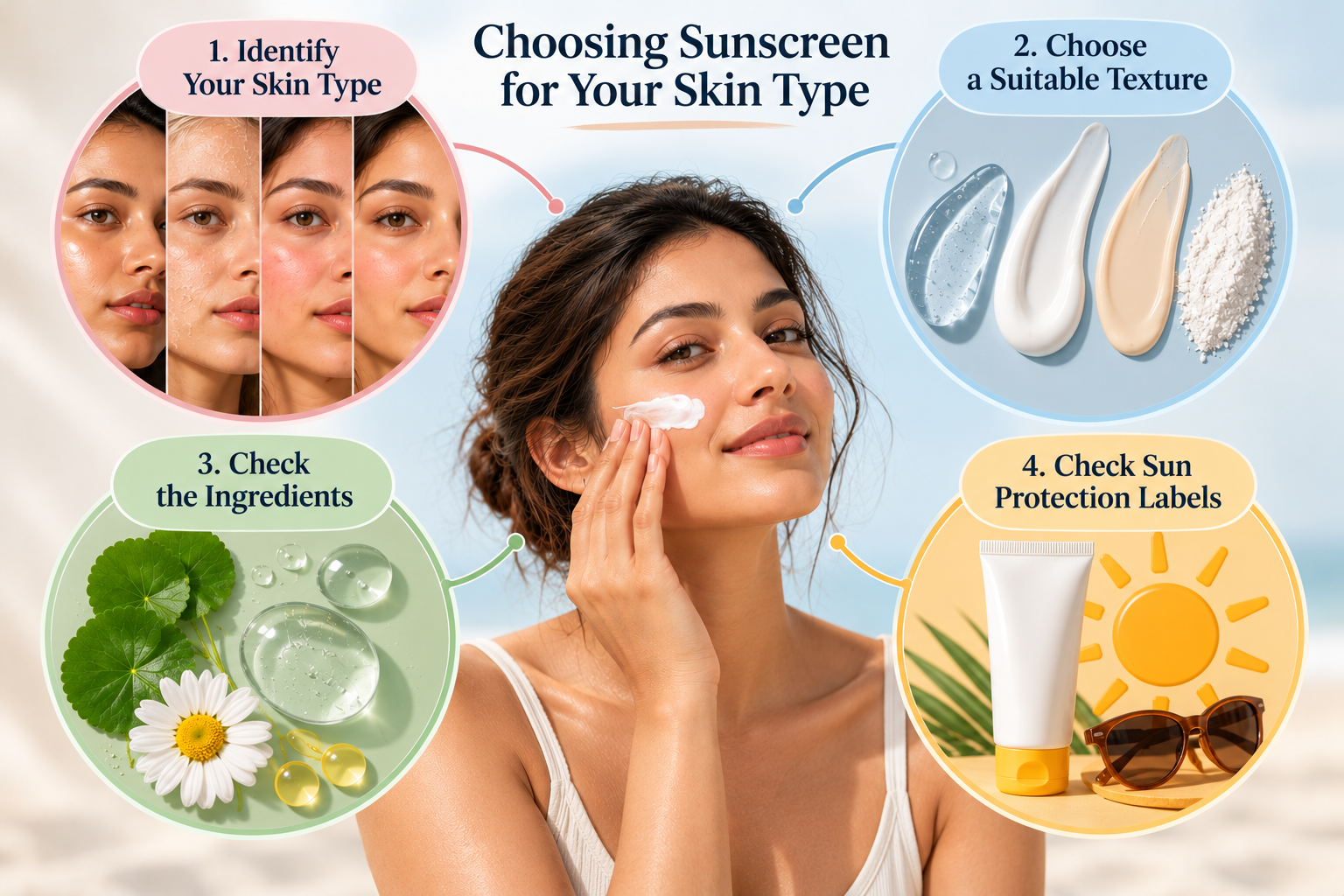
Look for a suitable sunscreen. Check the texture. Go through the ingredients. Review the sun protection labels . Consider daily comfort.
1. Identify Your Skin Type
Each skin has its own requirements. Oily skin generates sebum. Dry skin feels tight. Sensitive skin react easily. Combination skin has mixed needs.
– Oily Skin
- Visible shine.
- Excess oil.
- Enlarged pores.
– Dry Skin
- Tightness.
- Flaky patches.
- Roughness.
– Sensitive Skin
- Redness.
- Stinging.
- Itching.
– Combination Skin
- Oily T-zone.
- Dry cheeks.
- Mixed needs.
2. Choose a Suitable Texture
Texture can affect daily comfort. Gel formulas often feel lightweight. Cream formulas usually feel richer. Fluid formulas spread easily. Mineral formulas contain zinc oxide. Or it may contain titanium dioxide. A white cast may sometimes remain.
– Gel
- Lightweight.
- Easy spreading.
- Oily skin.
– Cream
- Rich texture.
- Added moisture.
- Dry skin.
– Fluid
- Thin texture.
- Easy application.
- Combination skin.
– Mineral
- Zinc oxide.
- Titanium dioxide.
- White cast.
3. Check the Ingredients
Ingredients affect Skin comfort. Glycerin attract moisture. Ceramides protects skin barrier. Hyaluronic acid retain fluid. Niacinamide suit some routines. Consider personal sensitivities.
– Hydration
- Glycerin.
- Ceramides.
- Hyaluronic acid.
– Oily Skin
- Lightweight formulas.
- Non-greasy textures.
- Comfortable finishes.
– Sensitive Skin
- Fragrance-free options.
- Simple formulas.
- Patch testing.
4. Check Sun Protection Labels
Broad-spectrum protection should be selected. Two rays are covered. UVA and UVB rays. SPF 30 /higher is recommended. Water-resistant formulas suit swimming. They may also suit heavy sweating. Label instructions should be followed. Expiry dates should always be checked.
– Sun Protection
- Broad spectrum.
- SPF 30 minimum.
- Correct application.
– Water Resistance
- Swimming.
- Sweating.
- Label instructions.
– Product Safety
- Expiry date.
- Proper storage.
- Normal texture.
5. Compare Sunscreen by Skin Type
| Skin Type | Suitable Texture | Main Benefit |
| Oily skin |
|
Lightweight feel. |
| Dry skin |
|
Added moisture. |
| Sensitive skin |
|
Fewer potential irritants. |
| Combination skin |
|
Balanced comfort. |
Individual skin needs vary.
Best Sunscreen for Oily Skin
Lightweight protection is preferred. Heavy formulas may feel greasy. A comfortable product should be selected. Daily application should be maintained.
1. Choose Lightweight Formulas
Gel sunscreen often feels light. Fluid sunscreen preferred. As it spreads easily. Matte finishes used. Since it reduce visible shine. Some products may feel drying. Comfort should be checked before purchase.
– Gel
- Lightweight texture.
- Easy spreading.
- Less greasiness.
– Fluid
- Thin texture.
- Easy layering.
- Daily comfort.
– Matte Finish
- Reduced shine.
- Smooth appearance.
- Comfortable wear.
2. Check Suitable Ingredients
Niacinamide to supports skin barrier. Visible shine reduces. Glycerin to maintain moisture. Oily skin still wants hydration. Greasy products to be avoided.
– Niacinamide
- Skin barrier.
- Visible shine.
- Daily routine.
– Glycerin
- Moisture.
- Hydration.
- Skin comfort.
3. Avoid Uncomfortable Products
Look for any skin reaction. Burning means there is a problem. Stop using the product if itching continues. One can look for a new formula.
– Warning Signs
- Burning.
- Itching.
- Persistent redness.
– Better Choices
- Lightweight texture.
- Suitable ingredients.
- Comfortable finish.
4. Apply Sunscreen Properly
Apply after moisturiser. The face and neck need coverage. The ears should not be forgotten. Reapplication is needed during outdoor exposure. Swimming and sweating require extra attention.
– Application
- Even coverage.
- Face and neck.
- Exposed areas.
– Reapplication
- Every two hours outdoors.
- After swimming.
- After sweating.
Best Sunscreen for Dry Skin
Extra moisture is needed. Some formulas may cause tightness. Use creams and lotions. They feel comfortable. Select suitable sunscreen.
1. Choose Moisturising Formulas
Cream sunscreen often feels richer. Tightness may be reduced. Lotion sunscreen spreads easily. Both may suit dry skin. Products worsening dryness should be avoided.
– Cream
- Rich texture.
- Added moisture.
- Dry skin.
– Lotion
- Easy spreading.
- Lighter feel.
- Daily use.
2. Look for Hydrating Ingredients
Look for ingredients like:
– Glycerin
- Moisture.
- Hydration.
- Comfort.
– Ceramides
- Skin barrier.
- Moisture retention.
- Skin support.
– Hyaluronic Acid
- Water retention.
- Skin softness.
- Hydration.
3. Avoid Additional Dryness
Some sunscreens cause tightness. Avoid them. Choose a formula that suits dry skin. Avoid ingredients that irritate your skin.
– Check
- Tightness.
- Flaking.
- Irritation.
– Adjust
- Try alternatives.
- Add moisturiser.
- Avoid triggers.
4. Follow a Simple Routine
One should start Start by cleaning their face. Do not scrub too much. Follow with a moisturizer. Finally end with a sunscreen. Make sure to cover the exposed skin. One must apply again after two hours.
– Cleanse
- Mild cleanser.
- Gentle movements.
- Pat dry.
– Moisturise
- Suitable formula.
- Comfortable hydration.
- Allow settling.
– Protect
- Broad spectrum.
- Even coverage.
- Regular reapplication.
Master Makeup, Hair & Skincare to Build Your Beauty Identity
Unlock your creative potential with our expert-led Beauty & Wellness course. Build in-demand beauty skills and step confidently into the world of beauty!
Your Beauty Career Starts Here!Best Sunscreen for Sensitive Skin
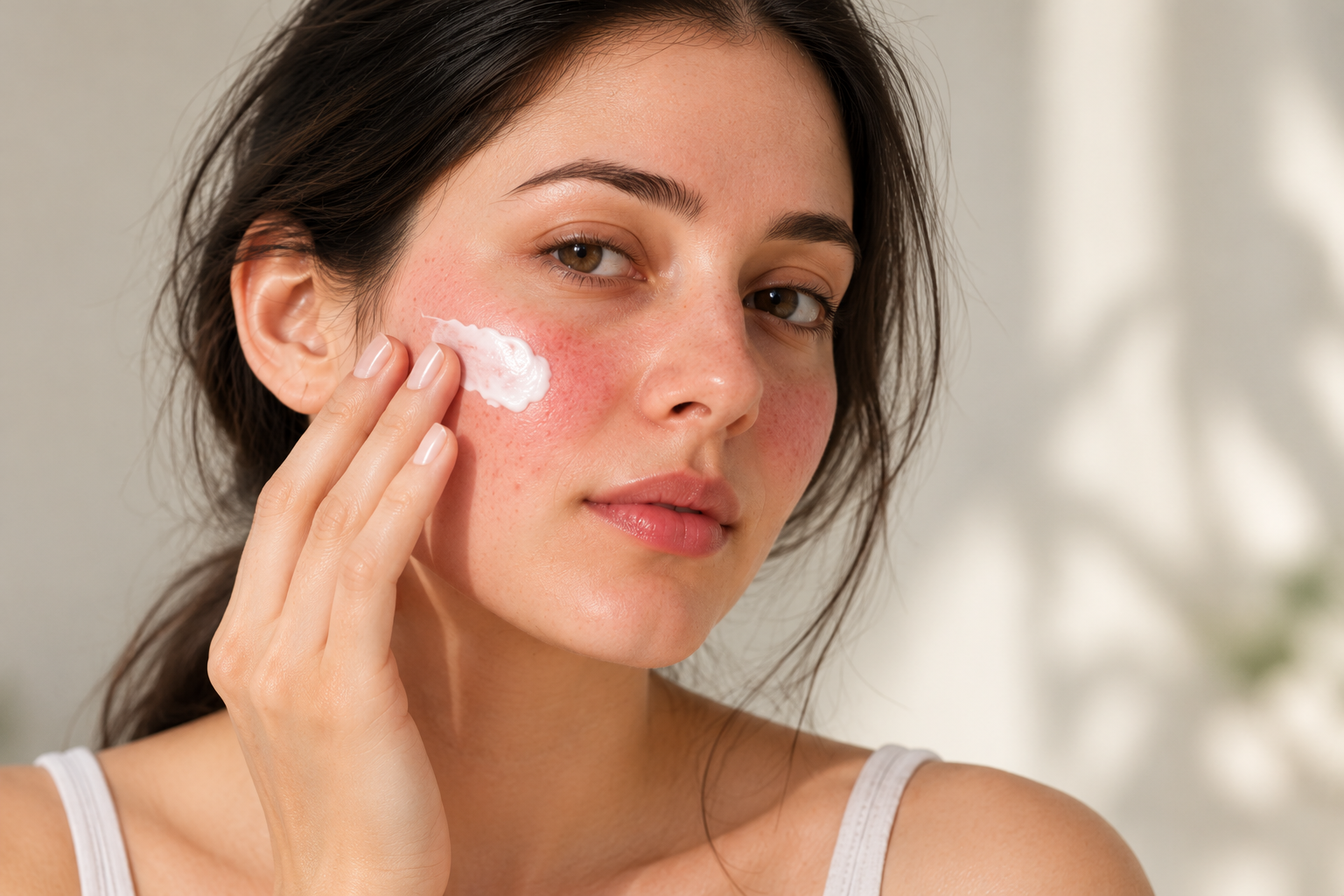
Sensitive skin react to some ingredients. One may develop redness. Followed by itching. Replace with gentle formulae.
1. Choose Gentle Formulas
Use products that has no fragrance. Mineral sunscreens can be suitable. One can use Zinc oxide. It provides sun protection. Titanium dioxide can also by helpful.
– Fragrance-Free
- Fewer fragrances.
- Gentle formulas.
- Personal comfort.
– Mineral
- Zinc oxide.
- Titanium dioxide.
- UV protection.
– Lightweight
- Easy spreading.
- Comfortable feel.
- Daily use.
2. Check the Ingredients
Check what each ingredient does.
– Zinc Oxide
- Mineral protection.
- UVA coverage.
- UVB coverage.
– Titanium Dioxide
- Mineral protection.
- UV protection.
- Gentle formulas.
– Moisturising Ingredients
- Glycerin.
- Ceramides.
- Skin comfort.
3. Avoid Possible Irritants
Certain ingredients may cause reactions. Fragrance may irritate some skin types. New products should be introduced carefully. Products causing discomfort should be stopped.
– Possible Triggers
- Fragrance.
- Irritating ingredients.
- Personal allergens.
– Warning Signs
- Burning.
- Itching.
- Redness.
– Safer Choices
- Gentle formulas.
- Fragrance-free products.
- Patch testing.
4. Test Before Regular Use
New sunscreen should be tested carefully. A small amount can be applied first. The skin should be observed. Irritation should not be ignored. Medical advice may be needed for persistent reactions.
– Patch Testing
- Small amount.
- Limited area.
- Skin observation.
– Skin Reactions
- Redness.
- Burning.
- Itching.
– Daily Protection
- Broad spectrum.
- SPF 30 or higher.
- Regular reapplication.
Master Advanced Skincare, Makeup, Hair, and Salon Management. Enrol Now!
Best Sunscreen for Combination Skin
Combination skin has different facial needs. The T-zone may appear oily. The cheeks may feel dry. A balanced formula may provide comfort. Sun protection should remain consistent.
1. Choose Balanced Formulas
Lightweight lotions may suit combination skin. Fluid sunscreens can spread easily. Gel-creams may provide balanced moisture. The final texture should feel comfortable.
– Lightweight Lotion
- Easy spreading.
- Balanced hydration.
- Daily comfort.
– Fluid Sunscreen
- Thin texture.
- Easy application.
- Makeup friendly.
– Gel-Cream
- Lightweight feel.
- Added moisture.
- Balanced texture.
2. Look for Helpful Ingredients
Some ingredients support skin hydration. Glycerin helps attract moisture. Ceramides support the skin barrier. Niacinamide may suit some routines. Personal skin needs should be considered.
– Glycerin
- Moisture.
- Hydration.
- Skin comfort.
– Ceramides
- Skin barrier.
- Moisture retention.
- Skin support.
– Niacinamide
- Skin barrier.
- Visible shine.
- Daily routine.
3. Avoid Unbalanced Formulas
Very heavy formulas may feel greasy. Some products may increase tightness. Different areas need different care. A comfortable formula should be selected.
– Excess Oil
- Heavy texture.
- Visible shine.
- Greasy feeling.
– Excess Dryness
- Tightness.
- Flaking.
- Discomfort.
– Better Choices
- Balanced texture.
- Suitable moisture.
- Comfortable finish.
4. Apply Sunscreen Evenly
Every exposed area should be covered. The forehead and cheeks need protection. The ears and neck should be included. Reapplication should be maintained outdoors.
– Preparation
- Gentle cleansing.
- Suitable moisturiser.
- Sunscreen application.
– Coverage
- Forehead.
- Cheeks.
- Ears and neck.
– Reapplication
- Every two hours outdoors.
- After swimming.
- After sweating.
What SPF Should You Choose?
SPF is something that protects one from UVB rays. Higher the SPF better is the protection. Good sunscreen covers both UV rays. UVA and UVB. Correct application is important.
1. Understand Common SPF Levels
Each SPF levels give different protection. SPF 30 is for daily use. SPF 50 is for higher protection. Sunscreen doesn’t block UV rays fully.
1. SPF 15
- Limited protection.
- Lower UVB coverage.
- Frequent reapplication.
2. SPF 30
- Everyday protection.
- About 97% UVB blocked.
- Correct application.
3. SPF 50
- Higher UVB protection.
- About 98% UVB blocked.
- Outdoor activities.
2. Compare SPF Levels
| SPF Level | Approximate UVB Rays Blocked | General Use |
| SPF 15 | Blocks 93% |
|
| SPF 30 | Blocks 97% |
|
| SPF 50 | Blocks 98% |
|
These figures assume correct application.
3. Check Broad-Spectrum Protection
Broad-spectrum sunscreen protects one from UV rays. It includes both UVA and UVB. UVA rays causes one to age early. Where as UVB leads to sunburn. Both are harmful for the skin. Hence one must select Broad-spectrum sunscreen for daily use.
– Label Checks
- Broad spectrum.
- SPF 30 minimum.
- Expiry date.
– Correct Use
- Generous application.
- Even coverage.
- Regular reapplication.
4. Consider Daily Activities
Application of sunscreen depends on daily routines. If you go out often you may need more protection. Swimming can remove sunscreen. Heavy sweating may reduce protection. Reapplication should follow product instructions.
– Indoor Activities
- Daily protection.
- Window exposure.
- Exposed skin.
– Outdoor Activities
- Broad-spectrum sunscreen.
- Protective clothing.
- Shade breaks.
– Swimming
- Water-resistant sunscreen.
- Label instructions.
- Reapplication afterward.
How to Apply Sunscreen Correctly
Sunscreen works well when applied in a proper manner. Too little sunscreen may reduce protection. Reapplication is also essential. A simple routine can make application easier.
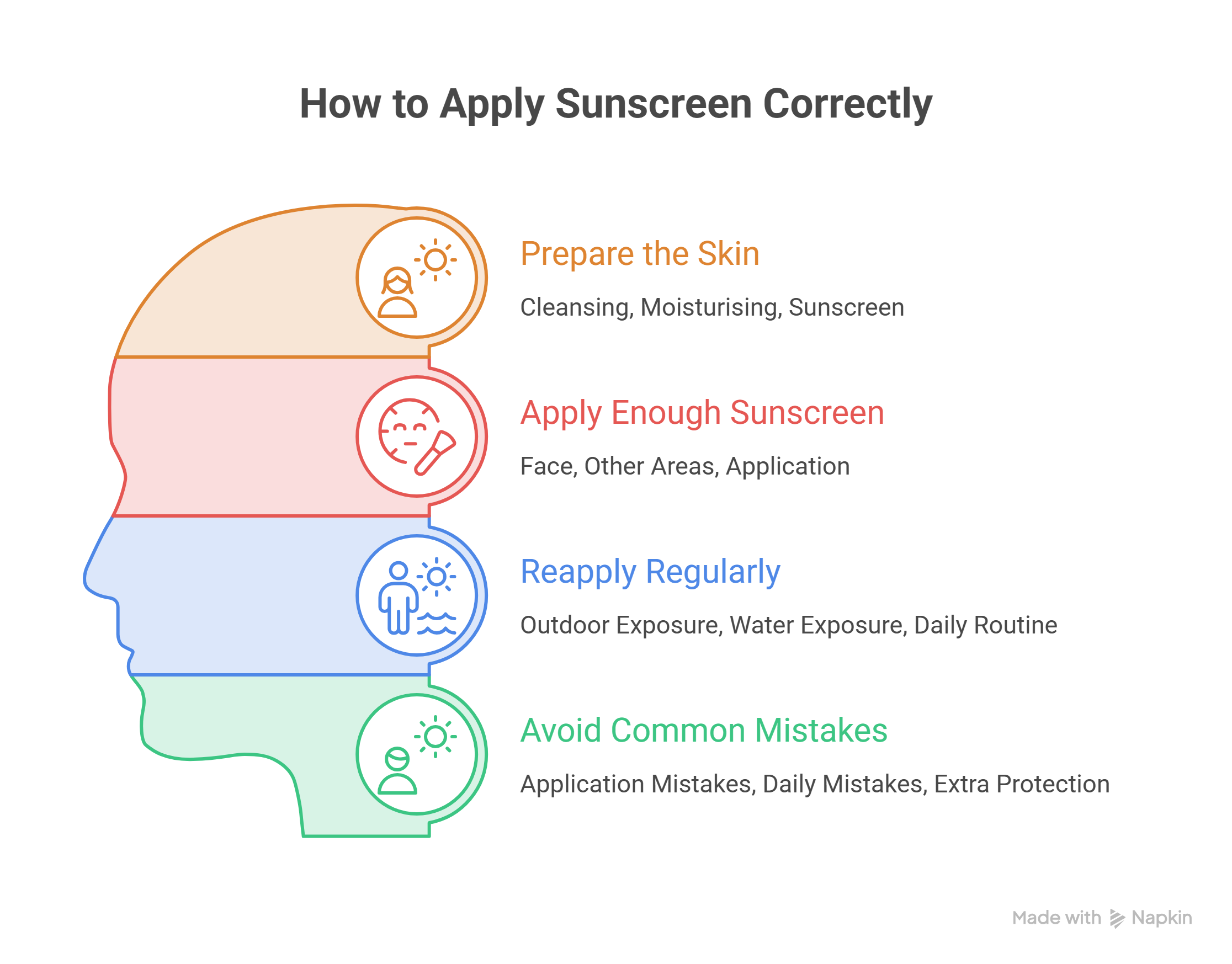
1. Prepare the Skin
The skin is prepared by cleaning it first. Then moisturizer should be applied. It should settle before sunscreen. Before applying the makeup apply the sunscreen.
– Cleansing
- Mild cleanser.
- Gentle movements.
- Pat dry.
– Moisturising
- Suitable formula.
- Comfortable hydration.
- Allow settling.
– Sunscreen
- Final skincare step.
- Even coverage.
- Before makeup.
2. Apply Enough Sunscreen
All exposed skin should be covered. The face needs even application. The neck and ears should not be missed. Product instructions should be followed. A thin layer may provide less protection.
– Face
- Forehead.
- Cheeks.
- Nose and chin.
– Other Areas
- Ears.
- Neck.
- Exposed body.
– Application
- Generous amount.
- Even layer.
- Full coverage.
3. Reapply Sunscreen Regularly
Sunscreen come off during day to day activities. Reapplication is especially important outdoors. Swimming and sweating can reduce protection. Using towels can also remove sunscreen.
– Outdoor Exposure
- Every two hours.
- Continued protection.
- Product instructions.
– Water Exposure
- After swimming.
- After sweating.
- After towel drying.
– Daily Routine
- Carry sunscreen.
- Check exposure.
- Reapply when needed.
4. Avoid Common Mistakes
Common mistakes can reduce sun protection. Sunscreen should not be skipped on cloudy days. Small amounts may provide less protection. Exposed areas should not be forgotten.
– Application Mistakes
- Too little.
- Uneven coverage.
- Missed areas.
– Daily Mistakes
- Skipping sunscreen.
- Forgetting reapplication.
- Using expired products.
– Extra Protection
- Protective clothing.
- Sunglasses.
- Shade breaks.
5. Follow This Simple Guide
A simple routine supports consistent protection. Each step should be followed carefully. Reapplication should be included. Extra protection should also be used.
| Step | What to Do | Reminder |
| 1 | Cleanse and moisturise. | Keep products gentle. |
| 2 | Apply sunscreen. | Cover exposed skin. |
| 3 | Apply makeup afterward. | Let sunscreen settle. |
| 4 | Reapply outdoors. | About every two hours. |
| 5 | Add extra protection. | Use shade and clothing. |
Conclusion
Sunscreen should match individual skin needs. Lightweight formulas may suit oily skin. Moisturising formulas may suit dry skin. Gentle products may suit sensitive skin. Balanced formulas may suit combination skin. Broad-spectrum SPF 30 or higher is recommended. The right texture improves daily comfort. Regular application helps maintain protection.
Sun protection should become a daily habit. Sunscreen should be applied generously. Reapplication should be maintained outdoors. Shade and protective clothing provide extra support. Sunglasses can also protect exposed areas. Consistent care helps reduce sun damage. A suitable sunscreen makes protection easier.
Master Makeup, Hair & Skincare to Build Your Beauty Identity
Unlock your creative potential with our expert-led Beauty & Wellness course. Build in-demand beauty skills and step confidently into the world of beauty!
Your Beauty Career Starts Here!Frequently Asked Questions
How do I choose sunscreen for my skin type?
Choose sunscreen based on your skin’s needs. Lightweight formulas suit oily skin, while moisturising options suit dry skin.
What SPF level is best for daily use?
Broad-spectrum SPF 30 or higher is recommended for daily protection. Higher SPF can provide more protection against UVB rays.
Which sunscreen is best for oily skin?
Gel-based and lightweight sunscreens often suit oily skin. Non-comedogenic formulas may help reduce clogged pores.
Which sunscreen is best for dry skin?
Cream-based sunscreens can help moisturise dry skin. Look for ingredients like glycerin, ceramides, and hyaluronic acid.
How should sensitive skin choose sunscreen?
Choose gentle sunscreen made for sensitive skin. Fragrance-free formulas may help reduce irritation.
What type of sunscreen suits combination skin?
Lightweight lotions often work well for combination skin. They can hydrate dry areas without feeling too heavy.
Should sunscreen be applied every day?
Yes, sunscreen should be used every day. UV rays can affect skin during different weather conditions.
How much sunscreen should be applied?
Apply enough sunscreen to cover all exposed skin. Follow the product instructions and avoid leaving areas uncovered.
How often should sunscreen be reapplied?
Sunscreen should generally be reapplied every two hours outdoors. Reapply sooner after swimming, sweating, or towel drying.
Can sunscreen prevent all sun damage?
Sunscreen helps reduce damage from ultraviolet rays. Shade, protective clothing, and sunglasses provide additional protection.