Table of Contents
No, AI won’t be taking over the role of an SEO specialist in 2026. But it is already changing the way the job gets done in the background.
The reality is that AI tools are doing the bulk of the mind-numbing, repetitive tasks. This includes handling everything from keyword clustering to churning out first drafts, to generating reports.
But it means that strategy, pure judgment and being in charge of getting your site seen are becoming more valuable.
Join Our Online Next Gen AI Digital Marketing Course & Learn the Fundamentals!
Key Takeaways
- AI speeds drafting but not strategy.
- Zero-click searches: ~68%, ~83% with AI Overview.
- 69% of SEOs disrupted; ~30% of enterprises restructured.
- 59% of listings are senior/lead roles; specialists shrinking.
- Google penalizes low-value, unoriginal content, not AI per se.
- In-demand: project management, communication, troubleshooting, AI tools.
- Use AI for routine work; focus on judgment and measurable outcomes.
Why this Question won’t Go Away
1: What is the primary goal of SEO (Search Engine Optimization)?
Every few months, a new AI model launch reignites the same anxiety in SEO circles. This is a fair question as the search culture itself is changing fast.
AI Overviews now appear on more than one in five Google searches, and Google keeps folding AI deeper into the results page.
None of that means the discipline is disappearing; it means SEO tasks are being redistributed between software and people, and specialists who adapt fastest are pulling ahead.
Become an AI-powered Digital Marketing Expert
Master AI-Driven Digital Marketing: Learn Core Skills and Tools to Lead the Industry!
Explore CourseWhat AI Already does well in SEO

AI has genuinely useful applications across the SEO workflow today. Used well, it removes hours of manual, repeatable work. But nearly every use case below still needs a human to validate, edit, or make the final call.
| SEO task | AI’s current role | Where humans still lead |
| Keyword research & clustering | Groups keywords and surfaces topic gaps quickly | Validating intent, local nuance, and business relevance |
| Content drafting | Produces first drafts and meta copy in minutes | Fact-checking, original insight, brand voice, E-E-A-T |
| On-page optimization | Suggests schema, internal links, alt text | Site-wide taxonomy and canonicalization decisions |
| Technical audits | Flags anomalies and crawl issues faster | Diagnosing root causes and prioritizing fixes by business risk |
| Reporting & dashboards | Auto-generates summaries and alerts | Interpreting results and tying them to business strategy |
| Outreach & link building | Drafts prospect lists and templates | Relationship-building and negotiation |
The pattern across every row is the same. AI compresses the time to first draft. It doesn’t remove the need for someone who understands the business, the audience, and the risk of getting it wrong.
The Real Disruption isn’t AI Writing – It’s Zero-Click Search
If there’s one shift SEOs should actually be worried about, it isn’t AI drafting blog posts. It is how much search behaviour itself has changed.
| Metric | 2026 figure | Source |
| Overall Google zero-click rate | ~68% of searches end with no click | SparkToro / Similarweb, June 2026 |
| Zero-click rate when an AI Overview appears | ~83% | Bain & Company / industry aggregates |
| Zero-click rate inside Google’s AI Mode | ~93% | Semrush, 2026 |
| Click-through with vs. without an AI Overview present | 8% vs. 15% | Pew Research Center |
| Share of Google searches now showing an AI Overview | 20%+ | SparkToro, 2026 |
This is the shift to actually plan for. Ranking #1 no longer guarantees a visit.
SEO is expanding to take in some new areas like Answer Engine Optimization (AEO) and Generative Engine Optimization (GEO). And that means you need to rethink how you structure your content so that it gets used in AI-generated answers – not just clicked on in search results.
That is down to some strategic, editorial calls – the kind of thing AI tools are perfectly happy to support. But a human needs to make the decision on. Just the kind of thing, in fact, that AI tools can make easier to do – but not replace.
What Google Actually Says about AI-Written Content
There’s this weird myth going around – Google penalises content just because it has been pretty much written by a machine. It is not true.
Google’s guidance tells us that all they care about is whether your content is useful and original.
What actually gets penalised is the stuff that’s churned out en-masse to try and manipulate search rankings – with barely any human touch or added value. Which in practice, means that its AI-assisted drafts that rank just fine if a knowledgeable human has had a good look at them, fact-checked them and added a bit of real-world expertise before they get published.
In short, the safest bet for avoiding penalties is to get some real editorial oversight happening – rather than trying to stay one step ahead of the AI game.
Become an AI-powered Digital Marketing Expert
Master AI-Driven Digital Marketing: Learn Core Skills and Tools to Lead the Industry!
Explore CourseThe Skills AI Still can’t Replace
Across every credible industry study, the same shortlist of human-led skills keeps showing up as the reason SEO specialists remain essential:
- Strategic prioritization – deciding what to fix first based on business impact, not just what a tool flags.
- Search intent and cultural nuance – understanding regional language, local search behaviour, and audience context that generic AI models miss.
- Original research and storytelling – the kind of first-hand expertise and unique data that satisfies Google’s E-E-A-T standard and can’t be generated from a prompt.
- Governance and risk judgment – catching hallucinations, copyright issues, and reputational risk in AI-assisted content before it publishes.
- Cross-functional communication – persuading stakeholders, aligning SEO with product and paid channels, and running experiments.
- Complex technical troubleshooting – diagnosing JavaScript rendering issues, crawl anomalies, and server-level problems that need real debugging skill.
How the SEO Job Market is Actually Responding
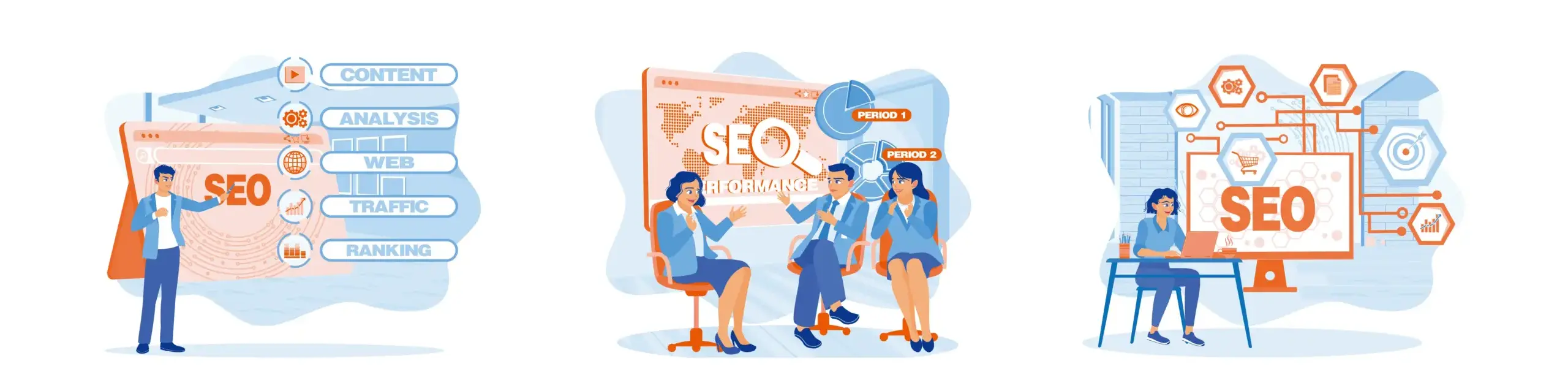
The clearest signal isn’t sentiment. It is hiring data. An analysis of roughly 3,900 live SEO job postings found that director-, VP-, and head-level roles account for 59% of listings. Whereas, traditional “SEO Specialist” and “SEO Manager” titles have shrunk to a combined 25% share.
Project management now appears in roughly a third of listings, and communication skills rank among the top requirements for both senior and non-senior roles. Separately, industry surveys estimate around 69% of SEO specialists will see some task disruption from generative AI.
Close to a third of enterprise teams have already restructured. Together, these numbers describe a market polarizing toward strategic, senior roles, not one eliminating the discipline.
A Practical Way to Stay Ahead
For anyone building or protecting an SEO career right now, the moves that matter are practical, not dramatic:
- Learn AEO and GEO fundamentals – understand how AI Overviews and chat-based search select and cite sources.
- Build analytics depth – GA4, basic SQL, and experiment design turn “I think this worked” into proof.
- Keep a human QA layer on every AI-assisted draft – fact-check, add original insight, and verify sourcing before publishing.
- Get comfortable with technical SEO – log files, JavaScript rendering, and site architecture are becoming differentiators, not niche skills.
- Document outcomes, not activity – a case study showing measurable traffic or conversion lift is worth more than a list of tools used.
Join Our Online Next Gen AI Digital Marketing Course & Learn the Fundamentals!
Conclusion
AI is not eliminating SEO specialists. It is eliminating the version of the job that was mostly manual, repetitive execution.
The professionals who treat AI as a productivity layer, while doubling down on strategy, technical depth, and original insight, are the ones showing up in the growing share of senior, cross-functional SEO roles.
The ones most at risk aren’t the ones using AI. They are the ones who never adapted their skill set beyond keyword lists and basic on-page checklists. In a search landscape where two-thirds of queries never generate a click, the specialists who understand why that is happening – and how to earn visibility inside it – are more valuable than ever.
Frequently Asked Questions
Which SEO tasks are most at risk from AI automation?
Repetitive, high-volume tasks like first-draft content, meta descriptions, and basic reporting are most automatable. Strategic planning, technical troubleshooting, and creative storytelling remain largely human-led.
Does Google penalize AI-generated content?
No, not simply for being AI-assisted. Google penalizes low-value, unoriginal content produced at scale to manipulate rankings, regardless of whether a human or AI wrote it.
How much has zero-click search actually grown?
Google searches now end without a click roughly 68% of the time overall, rising to about 83% when an AI Overview appears. This is a bigger structural shift for SEO than AI content generation itself.
What skills should SEO professionals prioritize in 2026?
Analytics (GA4, basic SQL), technical SEO (logs, JavaScript rendering), and AEO/GEO fluency are the highest-demand additions. Communication and project management also rank among top job requirements.
Are entry-level SEO jobs disappearing?
Mid-level “specialist” titles have shrunk as a share of the job market while senior and leadership roles have grown. This suggests entry paths are narrowing even as overall demand for SEO expertise persists.
How are companies restructuring their SEO teams because of AI?
Roughly a third of enterprise SEO teams have already reorganized roles and responsibilities around AI-assisted workflows. This typically means fewer purely execution-focused roles and more strategic, cross-channel positions.
Is technical SEO becoming more or less important?
More important. As AI handles routine execution, complex technical problems like JavaScript rendering and crawl issues have become a key differentiator for specialists.
Should SEO professionals learn to code?
Basic scripting and SQL are increasingly valuable, especially for technical and data-focused SEO roles. Content-focused roles benefit more from strong analytics and AI-tool fluency than deep coding skills.
What's the biggest mistake SEOs make with AI tools right now?
Publishing AI-generated content without human fact-checking or original insight is the most common risk. This produces generic, low-value content that both readers and Google’s quality systems tend to downrank.
What should someone do if they're worried about job security in SEO?
Focus on building measurable case studies, technical depth, and AEO/GEO knowledge rather than avoiding AI tools. Professionals who pair domain expertise with AI fluency are the ones filling the growing share of senior SEO roles.