Table of Contents
Introduction
Rice is more than food in India—it is part of daily life. From steamed rice with sambar in Kerala and Tamil Nadu to biryani in Hyderabad, poha in Maharashtra, and khichdi across North India, rice appears on plates in countless forms. In South India especially, rice is often the centre of lunch and dinner, paired with curries, lentils, vegetables, curd, and pickles.
Because rice is eaten so frequently, many people worry that it causes weight gain. The short answer is that rice alone does not make you gain weight. Like any carbohydrate-rich food, it can contribute to weight gain when eaten in large portions, combined with high-calorie sides, or consumed beyond your daily energy needs.
Read on to know more about what constitutes rice, how to determine portion sizes, and tips on eating healthy!
Why rice gets blamed for weight gain
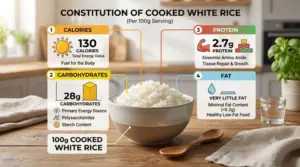
Rice is primarily a source of carbohydrates. Cooked white rice contains roughly 130 calories per 100 grams, along with about 28 grams of carbohydrates, 2.7 grams of protein, and very little fat.
The concern usually comes from how rice is eaten in real life. A large plate of rice with fried curries, ghee, papad, pickles, coconut chutney, or sweet dishes can easily become calorie-dense. In that situation, the extra calories come not only from rice but also from oils, fats, sugars, and oversized portions.
Weight gain occurs when calorie intake remains higher than calorie expenditure over time. Therefore, the real question is not “Is rice bad?” but “How much rice am I eating, and what am I eating with it?”
Turn Your Passion for Fitness into a Profession
Learn practical skills, get certified, and step into the growing fitness industry with confidence.
Join the CourseRice and calories: what the numbers mean
A standard cooked serving matters more than the type of rice alone.
| Rice portion, cooked | Approximate calories |
|---|---|
| 100 g cooked white rice | About 130 calories |
| 1 cup cooked white rice, about 158 g | About 205 calories |
| 100 g cooked brown rice | About 112 calories |
| 1 cup cooked brown rice, about 195 g | About 218–250 calories |
These numbers show that rice is not unusually high in calories by itself. However, portions can add up quickly. Two large servings of rice, especially with oily gravies, may contribute several hundred calories to a single meal.
Become a General Fitness Trainer with Entri’s certified course!
Different types of rice and their value
Not all rice is nutritionally identical. The main difference lies in processing: whole-grain rice retains more of its bran and germ, while polished white rice loses much of its fibre and micronutrients.
| Type of rice | Nutritional value | Best use |
|---|---|---|
| White rice | Easy to digest, low in fat, provides quick energy; lower in fibre because the bran and germ are removed during polishing. | Everyday meals, especially when paired with dal, vegetables, curd, or lean protein |
| Brown rice | Contains more fibre, magnesium, manganese, and B vitamins than white rice; one cooked cup provides about 3 grams of fibre. | A better option for people seeking improved satiety and steadier blood-sugar response |
| Red rice | Retains its outer bran layer, giving it a nutty taste and more fibre and antioxidants than highly polished white rice. | Traditional meals, pulao, and rice bowls |
| Black rice | Rich in anthocyanins, the pigments that give it its dark colour; also provides fibre and minerals. | Salads, khichdi, desserts, and special dishes |
| Parboiled rice | Partially boiled before milling, which helps retain some nutrients; commonly used in South India. | Daily meals and dishes such as idli, dosa batter, and steamed rice |
| Hand-pounded or minimally polished rice | Less processed than fully polished white rice, so it generally retains more fibre and micronutrients. | Traditional South Indian meals |
| Basmati rice | Long-grain aromatic rice; nutritionally similar to other white rice but often used in smaller, flavour-focused portions. | Biryani, pulao, and festive dishes |
A study on Japanese workers found that those who ate white rice gained an average of 3 kg when compared to those who consumed brown or multi-grain rice.
Brown rice is often considered healthier because it contains more fibre and has a lower glycaemic index than white rice, meaning it is digested more slowly. Still, the calorie difference is modest, so portion control remains important even with brown rice.
Does rice at night cause weight gain?
No, eating rice at night does not automatically cause weight gain. Your body uses calories throughout the day, and total daily intake and activity levels matter more than the clock.
That said, a heavy late-night meal may not suit everyone. If dinner is followed immediately by sleep, large portions of rice with fried or rich foods can cause discomfort, bloating, or poor digestion in some people. A lighter dinner—such as a moderate serving of rice with vegetable curry, dal, or curd—can be perfectly healthy.
Turn Your Passion for Fitness into a Profession
Learn practical skills, get certified, and step into the growing fitness industry with confidence.
Join the CourseHealthy portion sizes for rice
There is no single portion that suits everyone. The right amount depends on age, body size, activity level, medical conditions, and whether rice is the main source of carbohydrates in the meal.
As a practical starting point:
- Use 1/2 to 1 cup of cooked rice per meal if you are trying to manage weight.
- Fill half your plate with vegetables, one-quarter with rice or another grain, and one-quarter with protein such as dal, fish, egg, chicken, paneer, or curd.
- Avoid eating rice directly from a large serving bowl, as it becomes difficult to track portions.
- If you are highly active, you may need a larger portion; if you are sedentary or managing diabetes, a smaller portion may be more appropriate.
A balanced South Indian plate could include one cup of rice, sambar, poriyal or thoran, a small serving of curd, and a portion of dal or fish curry prepared with minimal oil.
How to eat rice without gaining weight
Rice can remain part of a weight-conscious diet with a few simple changes.
- Measure before serving. Start with 1/2 to 1 cup of cooked rice and add more only if genuinely hungry.
- Pair rice with protein. Dal, sambar, eggs, fish, chicken, soya, paneer, or curd improve fullness and balance the meal.
- Add vegetables generously. Fibre-rich vegetables reduce the tendency to overeat rice.
- Choose healthier cooking methods. Steamed or boiled rice is preferable to fried rice, ghee rice, or rice cooked with excess oil.
- Limit high-calorie accompaniments. Papad, deep-fried snacks, coconut-heavy curries, and sugary desserts can raise a meal’s calorie load quickly.
- Try brown, red, or hand-pounded rice. These options provide more fibre and may keep you full for longer.
- Avoid sugary drinks with meals. A plate of rice with a sweet beverage can turn an otherwise reasonable meal into a calorie surplus.
- Do not skip meals to “save” calories. Extreme restriction often leads to overeating later.
Healthier Alternatives to Rice
You do not need to replace rice completely to eat healthily. However, rotating it with fibre-rich grains, millets, legumes, and vegetable-based options can add variety and may help you feel full for longer. Millets, for example, are naturally gluten-free and generally provide more fibre, protein, and minerals than polished white rice.
| Alternative | Why it can be a good choice | How to use it |
|---|---|---|
| Brown rice | Retains more fibre, vitamins, and minerals than white rice because it is less processed. | Use for steamed rice, pulao, or rice bowls |
| Red rice | Contains the bran layer, giving it more fibre and a nutty flavour. | Pair with sambar, curries, or stir-fried vegetables |
| Millets | Rich in fibre, protein, and minerals; many varieties have a lower glycaemic index than white rice. | Make millet upma, pongal, khichdi, dosa, or idli |
| Quinoa | Higher in protein than rice and contains all nine essential amino acids. | Use in salads, bowls, or as a replacement for rice at lunch |
| Barley | Provides more fibre than white rice and supports longer-lasting fullness. | Add to soups, khichdi, or vegetable pulao |
| Dalia or broken wheat | A familiar, fibre-rich option that works well in savoury porridges and upma. | Prepare vegetable dalia upma or dalia khichdi |
| Cauliflower rice | Much lower in calories and carbohydrates than cooked rice; half a cup contains about 13 calories. | Use as a base for fried rice-style dishes or grain bowls |
| Lentils and legumes | Add protein and fibre, making meals more filling than rice alone. | Combine small portions of rice with dal, rajma, chana, or sambar |
For weight management, the best approach is usually substitution rather than elimination. For instance, replace white rice with millet upma two or three times a week, or serve a smaller portion of rice with a larger serving of dal and vegetables. Millets may be especially useful because their fibre and slower-digesting carbohydrates can support satiety and more stable blood-sugar levels.
Turn your passion into a profession with Entri’s Advanced Certified Personal Trainer Course!
Common myths about rice
Myth: Rice is fattening.
Fact: Plain rice is not fattening on its own. Weight gain depends on total calorie intake, portion sizes, and lifestyle habits.
Myth: You must stop eating rice to lose weight.
Fact: Most people do not need to eliminate rice. Reducing the portion and improving meal balance is usually more sustainable than complete avoidance.
Myth: Brown rice has very few calories.
Fact: Brown rice is nutritious and higher in fibre, but it still contains calories—about 112 calories per 100 grams when cooked.
Myth: Eating rice at dinner is unhealthy.
Fact: Rice at dinner is fine for most people when the portion is moderate and the meal includes vegetables and protein.
Sample healthy rice meals
- Kerala-style lunch: 1 cup red or brown rice, fish curry with less oil, thoran made with seasonal vegetables, and a small bowl of curd.
- Simple dinner: 1/2 cup white rice, dal, stir-fried vegetables, and salad.
- Weight-management bowl: 1/2 cup brown rice, rajma or chana, sautéed vegetables, and curd.
- Light comfort meal: Vegetable khichdi made with moong dal, vegetables, and minimal ghee.

The bottom line
Rice does not make you gain weight by itself. It becomes a problem only when portions are too large, meals lack protein and vegetables, or rice is regularly paired with oily and sugary foods. For most people, the healthiest approach is not to give up rice but to eat it mindfully—choose the right portion, add fibre and protein, and keep the overall diet balanced.
Turn Your Passion for Fitness into a Profession
Learn practical skills, get certified, and step into the growing fitness industry with confidence.
Join the CourseFrequently Asked Questions
Does eating rice every day make you gain weight?
No. Eating rice every day does not automatically lead to weight gain. Weight gain depends on your total calorie intake, portion sizes, activity level, and the oils, sugars, and high-calorie foods eaten with rice.
How much rice should I eat in a day?
There is no universal amount, but a practical portion for many adults is 1/2 to 1 cup of cooked rice per meal. Active people may need more, while those managing weight or blood sugar may benefit from a smaller serving paired with protein and vegetables.
Is brown rice better than white rice for weight loss?
Brown rice contains more fibre and micronutrients than white rice, which may help you feel full for longer. However, its calorie content is not dramatically lower, so portion control still matters.
Is it okay to eat rice at night?
Yes. Rice at night is not unhealthy for most people. Choose a moderate portion and pair it with vegetables, dal, curd, or lean protein rather than fried or heavily sweetened foods.
Which rice is best for diabetes?
Whole-grain options such as brown rice, red rice, and certain millets may cause a slower rise in blood sugar than polished white rice because of their higher fibre content. People with diabetes should still monitor portions and consult a doctor or dietitian for personalised advice.
Can I eat rice while trying to lose weight?
Yes. You can include rice in a weight-loss diet by controlling the portion, avoiding excess oil and ghee, and balancing the meal with vegetables and protein.
What is the healthiest alternative to rice?
There is no single “healthiest” option. Millets, brown rice, quinoa, barley, dalia, and cauliflower rice each offer different benefits. The best choice depends on your health goals, digestion, budget, and taste preferences.
Does rice cause belly fat?
No specific food, including rice, directly causes belly fat. Belly fat generally develops from a sustained calorie surplus, genetics, age, hormones, sleep, stress, and overall lifestyle habits.