Table of Contents
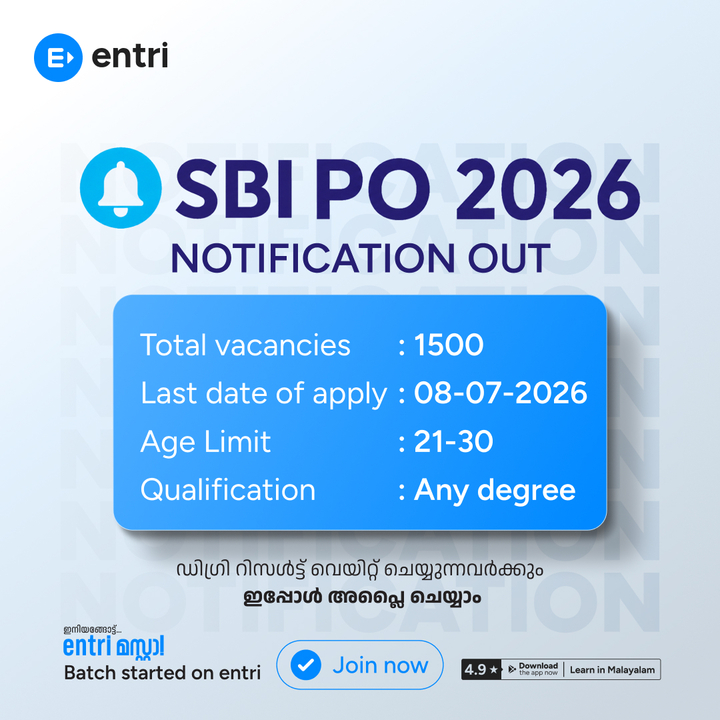
Cracking the SBI PO 2026 exam isn’t just about scoring well in Prelims and Mains — the final hurdle, Phase III, is where most aspirants lose their edge. With the SBI PO 2026 Notification already out (applications open 18 June – 8 July 2026, with around 1,500 vacancies), now is the right time to start planning your interview strategy alongside your written exam prep.
Most coaching institutes spend 90% of their time on Prelims and Mains strategy and barely touch the Phase III round — yet this stage carries real weightage in your final merit. This guide breaks down exactly how the SBI PO Interview and Selection Process 2026 works, why it matters, and how to prepare for each component like a topper.
SBI PO Syllabus 2026 PDF Download
SBI PO 2026 Previous Question Papers
| Previous Question Papers | PDFs |
| SBI PO 2018 Preliminary Exam | |
| SBI PO Prelims Exam 2017 | |
| SBI PO 2015 Preliminary Exam | |
| SBI PO Preliminary Exam 2006 |
SBI PO Exam 2026 – Check Details Here!
1: What does the acronym "ATM" stand for in banking?
| Parameter | Details |
|---|---|
| Organization | State Bank of India (SBI) |
| Exam Name | SBI PO Exam 2025-26 |
| Post | Probationary Officers (PO) |
| Vacancy | To be announced |
| Category | Bank Job |
| Job Location | All over India |
| Educational Qualification | Graduation |
| Application Mode | Online |
| Age Limit | 21-30 Years |
| Selection Process | Prelims, Mains, Interview |
| SBI PO Exam Date 2025 | To be announced |
| Medium of Exam | 13 languages |
| Number of Questions | Prelims: 100, Mains + Descriptive: 155 + 2 |
| Total Marks | Prelims: 100, Mains: 250 |
| Official Website | www.sbi.co.in |
Enroll in Kerala's Top-rated Bank Coaching Program!
Are you ready to take your banking career aspirations to new heights? Join Entri App's Bank Exam Coaching program to kickstart your preparations!
Join Now!Why Does SBI Conduct an Interview for the PO Post?
Not every bank exam includes a personal interview — so why does SBI insist on one for the Probationary Officer role? A few reasons stand out:
1. A PO is the public face of the bank. Unlike purely analytical roles, a Probationary Officer needs both subject knowledge and people skills. Your intellectual ability is already tested in Prelims and Mains — the interview exists to assess emotional intelligence, communication, and how you carry yourself in front of customers.
2. A PO bridges staff and management. As a PO, you’ll often mediate between front-line employees and senior bank management — resolving grievances, implementing policy decisions, and escalating issues that can’t be solved locally. The interview panel is essentially testing your administrative and problem-solving instincts.
3. A PO carries real operational responsibility. From handling demonetisation-era cash crunches to today’s digital banking transitions and fraud-prevention protocols, POs are often the ones absorbing operational pressure at the branch level. Recruiters use the interview to gauge your composure under stress.
4. Customers and staff look to a PO for decisions. Quick, sound decision-making under uncertainty is a core PO trait, and it’s very hard to test this through MCQs — hence the face-to-face round.
SBI PO Selection Process 2026: Updated Pattern
The SBI PO Interview process has evolved. For 2026, the selection process consists of three phases:
- Phase I – Preliminary Exam: Objective test (English, Quantitative Aptitude, Reasoning) — purely qualifying, marks not counted in final merit.
- Phase II – Main Exam: Objective test (200 marks) + Descriptive Test (Letter & Essay writing, conducted online and typed).
- Phase III – Psychometric Test, Group Exercise & Personal Interview
Phase III is no longer just a Group Discussion and Interview. SBI has added a Psychometric Test as a qualifying component before the Group Exercise and Interview.
In the final merit list, Main Exam marks carry roughly 75% weightage, while Group Exercise + Interview together carry around 25% — so Phase III performance can genuinely make or break your selection, especially in a tight race for 1,500 seats.
1. Psychometric Test (Personality Profiling)
This is a newer addition to the SBI PO process. It’s a structured personality assessment used to understand your behavioural traits, decision-making style, and temperament. The results are shared with the interview panel beforehand, so the panel may already have a sense of your personality profile before you walk in — making authenticity in your psychometric responses just as important as in the interview itself.
Don’t try to “game” the psychometric test by guessing what sounds ideal. Inconsistent answers across similar questions are a red flag and can undercut your credibility in the interview.
2. Group Exercise (the evolved Group Discussion)
The traditional GD has been restructured into a broader Group Exercise, which may include case-based discussions, group tasks, or a structured discussion on a given topic. It evaluates:
- Communication and articulation
- Listening and collaboration
- Rational thinking and argument-handling
- Leadership and consensus-building
Dos and don’ts for the SBI PO 2026 Group Exercise:
- Try to be among the first few to contribute — panels notice who breaks the silence, but don’t force it artificially.
- Listening matters as much as speaking. Build on what others say rather than just waiting for your turn.
- Keep your points crisp. Dominating the conversation works against you, not for you.
- Avoid turning it into a debate. Steamrolling a colleague’s point signals low emotional intelligence, not strength.
- Aim to help the group reach a balanced conclusion — this showcases coordination and leadership far better than “winning” the argument.
3. Personal Interview
The interview panel typically includes a subject expert and a psychologist or HR specialist. By this stage, your technical knowledge has already been tested twice — so the interview focuses on how you handle the unknown, your composure, and your overall personality fit for a banking career.
SBI PO 2026 Interview dos and don’ts:
- Carry an updated resume with zero errors, ideally on a single page. Mistakes here suggest carelessness — not a great look for someone who’ll be handling customer accounts.
- Skip the cliché self-introduction. “My name is…” tells the panel nothing they don’t already have on paper. Use this opener to highlight your aspirations, strengths, or what drives you toward a banking career.
- Never fabricate answers. Interview panels are skilled at probing inconsistencies — honesty and self-awareness leave a far better impression than a polished lie.
- It’s fine to say “I don’t know.” Acknowledging a gap shows maturity. Just don’t lean on it for every question — that signals a lack of preparation, not humility.
- Stay composed under pressure. Panels sometimes deliberately push back on a correct answer or ask deliberately tricky questions to test your stress response. Reacting defensively or getting flustered counts against you.
- Be current-affairs ready. With banking, digital payments, RBI policy, and the broader economy evolving quickly, expect questions on recent developments — not just textbook banking awareness.
- Smile, stay genuine, and leave on a confident note — first and last impressions both matter.
How to Prepare for SBI PO 2026 Exam: Strategy & Tricks
- Don’t try to “predict” interview questions. There’s no fixed question bank — preparation here is about mindset and communication, not memorization.
- Mock interviews and mock group exercises are far more valuable than reading generic question lists. Practise thinking aloud, structuring answers, and handling follow-up pressure.
- Stay updated on banking and economic current affairs — RBI monetary policy, digital banking trends, financial inclusion schemes, and major SBI initiatives are common discussion points.
- Revisit your resume and application form before the interview — panels frequently ask about specifics you’ve mentioned (hobbies, achievements, work experience).
- Work on structured, concise responses — both for the Group Exercise and one-on-one questions. Rambling answers dilute strong points.