Table of Contents
Cracking SBI PO 2026 starts with choosing the right study material. With lakhs of aspirants competing for limited seats, having well-structured books for Quantitative Aptitude, Reasoning, English, and General Awareness can make all the difference. The right books simplify complex topics, offer ample practice sets, and align with the latest exam pattern. In this guide, we’ve handpicked the best SBI PO preparation books for 2026 to help you build strong fundamentals, sharpen problem-solving speed, and improve your overall score in Prelims and Mains.
SBI PO Syllabus 2026 PDF Download
SBI PO 2026 Exam Details
| Parameter | Details |
|---|---|
| Organization | State Bank of India (SBI) |
| Exam Name | SBI PO Exam 2025-26 |
| Post | Probationary Officers (PO) |
| Vacancy | To be announced |
| Category | Bank Job |
| Job Location | All over India |
| Educational Qualification | Graduation |
| Application Mode | Online |
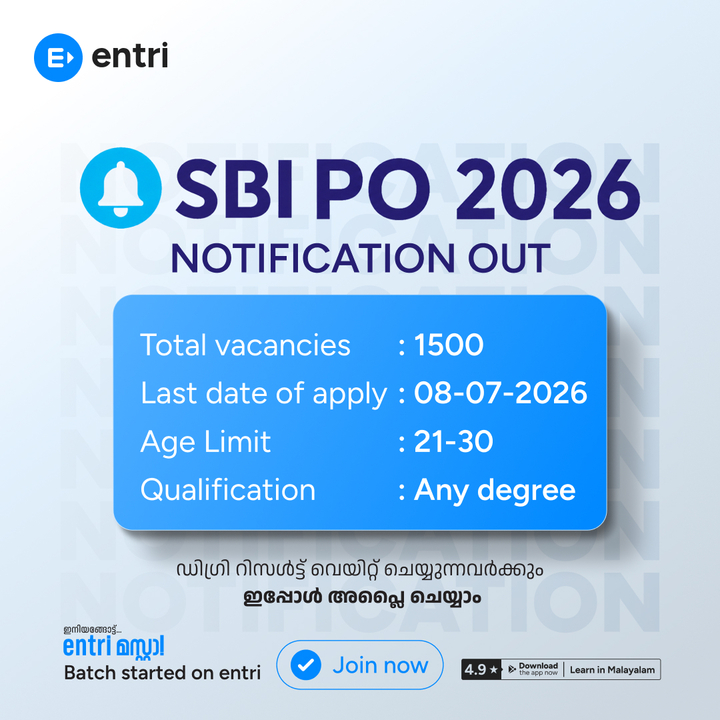
| Age Limit | 21-30 Years |
| Selection Process | Prelims, Mains, Interview |
| SBI PO Exam Date 2025 | To be announced |
| Medium of Exam | 13 languages |
| Number of Questions | Prelims: 100, Mains + Descriptive: 155 + 2 |
| Total Marks | Prelims: 100, Mains: 250 |
| Official Website | www.sbi.co.in |
Understanding the SBI PO 2026 Exam Pattern First
1: What does the acronym "ATM" stand for in banking?
Before picking up a single book, it helps to know exactly what you’re preparing for. SBI has revised the exam pattern this year, so even if you’ve prepared for banking exams before, take note of the changes.
Phase I – Preliminary Exam (qualifying only, not counted in final merit)
- 100 objective questions across English Language, Quantitative Aptitude, and Reasoning Ability
- 60 minutes total, with sectional timing
- 0.25 marks deducted per wrong answer
- No sectional cut-off in Prelims
Phase II – Mains Exam (counts toward final merit)
- Objective Test: 200 marks across 4 sections — Reasoning & Computer Aptitude, Data Analysis & Interpretation, General/Economy/Banking Awareness, and English Language
- Descriptive Test: reduced this year from 50 to 30 marks (Letter Writing, Essay, and now also Email Writing/Situation Analysis/Precis as per the revised format), 30 minutes, conducted online
- Sectional cut-offs apply in Mains
Phase III – Psychometric Test (non-scoring, used as input for the panel), Group Exercise (20 marks), and Personal Interview (30 marks)
The final merit list weighs Mains objective + descriptive scores at 75% and Group Exercise + Interview at 25%, normalized to 100 marks.
Enroll in Kerala's Top-rated Bank Coaching Program!
Are you ready to take your banking career aspirations to new heights? Join Entri App's Bank Exam Coaching program to kickstart your preparations!
Join Now!SBI PO 2026 – Mock Tests & Previous Year Papers
Books only take you halfway; SBI PO is fundamentally a speed-and-accuracy exam. Whatever your book choices:
- Solve at least 20–25 full-length Prelims mocks before the exam, analyzing each one rather than just attempting and moving on
- Practice previous years’ SBI PO Mains papers specifically — Disha Publications compiles solved papers that are particularly useful for understanding the DI and puzzle difficulty jump
- Take sectional mocks for Reasoning and DI separately, since these two sections decide most outcomes in Mains
| Previous Question Papers | PDFs |
| SBI PO 2018 Preliminary Exam | |
| SBI PO Prelims Exam 2017 | |
| SBI PO 2015 Preliminary Exam | |
| SBI PO Preliminary Exam 2006 |
With that framework in mind, here’s the book list mapped to each section.
SBI PO 2026 Quantitative Aptitude Books
This section covers Simplification, Number Series, Data Interpretation, Profit & Loss, Time & Work, Percentage, Ratio & Proportion, Quadratic Equations, Mensuration, and Data Sufficiency. In Mains, DI becomes far more advanced, with caselets and multi-step calculations.
- Quantitative Aptitude for Competitive Examinations – R.S. Aggarwal (strong for concept-building and foundational practice)
- Magical Book on Quicker Maths – M. Tyra (best for calculation shortcuts and speed)
- Fast Track Objective Arithmetic – Rajesh Verma (good topic-wise drilling)
- How to Prepare for Data Interpretation – Arun Sharma (essential for Mains-level DI and caselets)
- Quantum CAT – Sarvesh Kumar Verma (useful for advanced problem-solving once basics are strong)
Most successful candidates combine R.S. Aggarwal for concepts with M. Tyra for speed, then move to Arun Sharma specifically for Mains DI practice.
SBI PO 2026 Reasoning Ability & Computer Aptitude Books
Prelims Reasoning focuses on Puzzles, Seating Arrangement, Syllogism, Inequality, Coding-Decoding, and Blood Relations. Mains pushes this further into multi-variable puzzles, critical reasoning, and integrates Computer Aptitude (fundamentals, MS Office, networking, hardware/software basics).
- A Modern Approach to Verbal & Non-Verbal Reasoning – R.S. Aggarwal (the standard starting point)
- A New Approach to Reasoning Verbal & Non-Verbal – B.S. Sijwali & Indu Sijwali (well-structured for puzzle variety)
- Analytical Reasoning – M.K. Pandey (specifically for Mains-level puzzles and seating arrangements, which go well beyond Prelims difficulty)
- Objective Computer Awareness – Arihant Publications or R. Pillai (covers the computer aptitude portion integrated into Mains Reasoning)
A common gap candidates face: R.S. Aggarwal alone isn’t enough for SBI PO Mains puzzles. Supplement it with M.K. Pandey and previous years’ SBI PO papers, since the difficulty jump from Prelims to Mains in this section is significant.
Enroll in Kerala's Top-rated Bank Coaching Program!
Are you ready to take your banking career aspirations to new heights? Join Entri App's Bank Exam Coaching program to kickstart your preparations!
Join Now!SBI PO 2026 English Language Books
English appears in both Prelims (30–40 questions) and Mains (40 questions), plus the standalone Descriptive Test. Topics include Reading Comprehension, Cloze Test, Error Spotting, Jumbled Sentences, Fill-ups, and Vocabulary.
- Objective General English – S.P. Bakshi (comprehensive grammar and practice questions)
- Objective English for Competitive Examinations – Hari Mohan Prasad & Uma Rani Sinha
- Word Power Made Easy – Norman Lewis (vocabulary-building, useful for RC and descriptive writing)
- Wren & Martin’s High School English Grammar – for revisiting grammar fundamentals if needed
For the Descriptive Test specifically, books help less than active practice — read editorials from The Hindu or The Indian Express daily, and write timed letters and essays weekly.
SBI PO 2026 General Awareness, Banking & Economy Books
This is Mains-only but carries significant weight (60 questions, 60 marks) and covers static GK (currencies, capitals, awards, books & authors) alongside current banking and economic developments.
- Guide to Banking General Awareness – R. Gupta (solid for static banking concepts)
- Banking & Economy Awareness – Entri editions (updated yearly)
- Monthly current affairs compilations (e.g., Banking Services Chronicle) for recent RBI policies, government schemes, and budget updates
Since this section changes constantly, treat any printed book as a base layer and supplement it heavily with daily news and monthly digests — a 2024 edition book won’t have this year’s RBI monetary policy changes or new schemes.
SBI PO 2026 Books – A Simple Way to Choose
If you’re starting from scratch, you don’t need every book on this list. A lean, effective set looks like this:
- Quant: R.S. Aggarwal + M. Tyra
- Reasoning: R.S. Aggarwal (Prelims) + M.K. Pandey (Mains puzzles)
- English: S.P. Bakshi + daily editorial reading
- GA/Banking: One static GK guide + a monthly current affairs subscription
- Practice: Previous year papers + a structured mock test series
Pair this with a study plan that mirrors the actual exam pattern — Prelims-style speed practice early on, shifting to Mains-specific depth (advanced DI, critical reasoning, descriptive writing) once Prelims is behind you.
Use this list as a starting point, but build your preparation around the syllabus first and the books second. Revisit the syllabus periodically as you study, so you always know which topics still need work and which ones you can rely on during the exam.